Rearchitecting UNC Charlotte's 400-Subdomain Digital Ecosystem


UNC Charlotte's web presence had grown organically for years into an ecosystem of roughly 400 subdomains, each with its own navigation, visual language, and logic. For a university competing for students, that friction was a real liability.
UNC Charlotte engaged Savas Labs for a three-phase engagement — Discovery, Information Architecture, and Visual Design. We started with an intentionally broad Discovery phase: competitive auditing, user-flow analysis, stakeholder conversations, and a deep audit of the Charlotte digital ecosystem as it actually existed.
Discovery gave UNC Charlotte a shared, evidence-based understanding of where their digital experience fell short and a clear strategic direction for what to build next — grounding the Information Architecture and Visual Design phases that followed.
A website that outgrew its own logic
UNC Charlotte’s website had grown organically over years — and it showed. Prospective students navigating the path from curiosity to application found themselves bouncing between roughly 400 subdomains, each with its own navigation, its own visual language, and its own logic. The experience required users to rely on memory rather than design. For a university competing to attract undergraduate and graduate students in an increasingly crowded market, that friction wasn’t just an inconvenience — it was a liability.
UNC Charlotte engaged Savas Labs to lead a three-phase engagement: Discovery, Information Architecture, and Visual Design. The goal was clear — enhance the user experience, improve navigation, and modernize the site — but the path to get there required rigorous groundwork first.
Understand everything before recommending anything
Before recommending anything, we needed to understand everything. The Discovery phase was intentionally broad: competitive auditing, user flow analysis, stakeholder conversations, and a deep dive into the Charlotte digital ecosystem as it actually existed — not as anyone assumed it did.
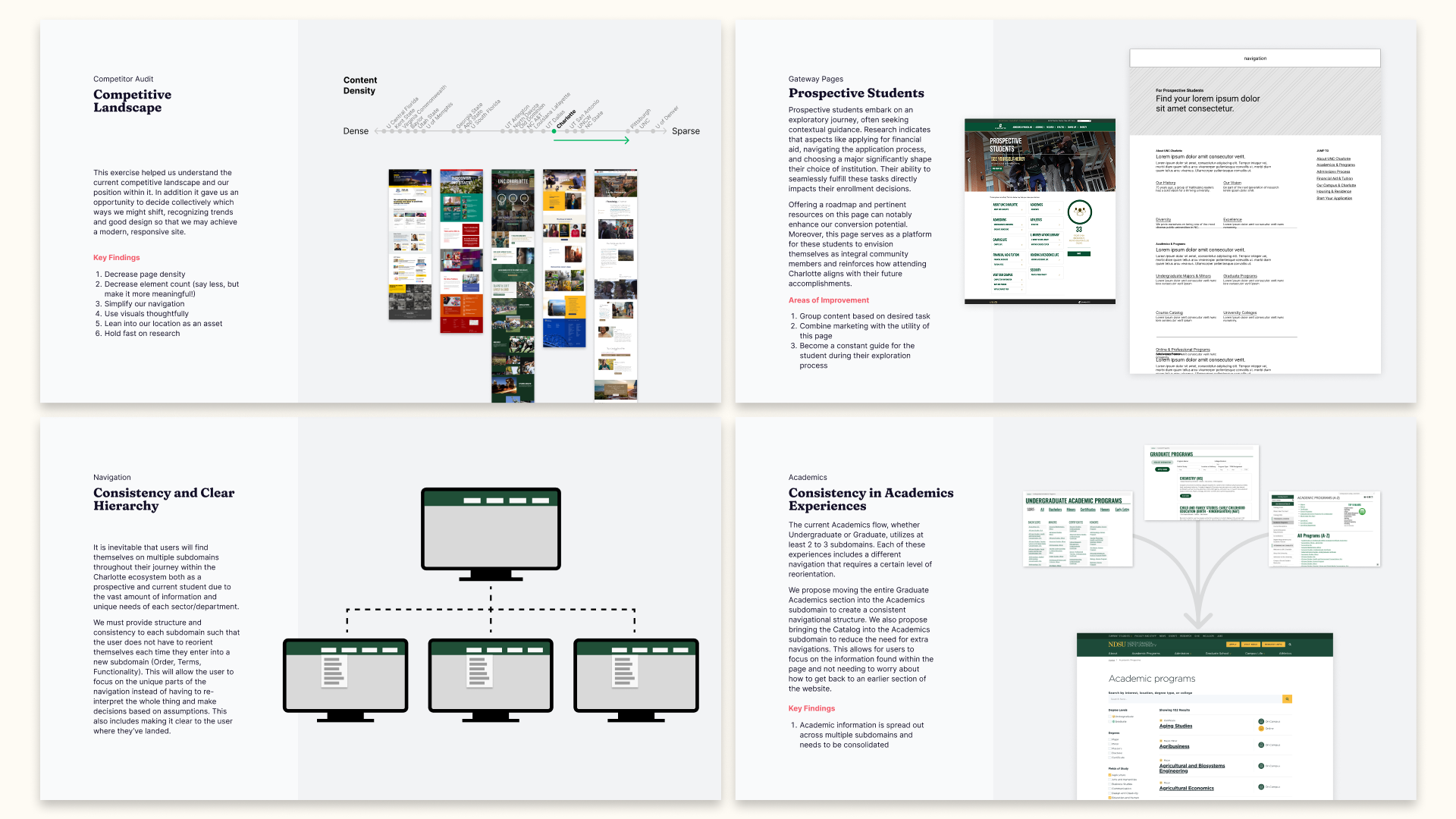
We structured our research around seven key areas, including a competitor audit, user-flow analysis, navigation patterns, and academics content strategy. Each stream was designed to surface not just what was broken, but why it wasn’t working — and what a better version could look like.
Five findings that defined the work
The competitive landscape demanded more with less. Benchmarking UNC Charlotte against peer institutions revealed a clear industry direction: less page density, fewer elements, more intentional visuals. Competitors were saying less and meaning more. Charlotte had the raw material — a compelling location, strong research credentials, a vibrant campus — but the site wasn’t doing that story justice. Six key findings shaped our recommendations, including simplifying navigation, using visuals more thoughtfully, and leaning into Charlotte’s proximity to Uptown as a genuine differentiator.
Academics and Admissions were disconnected — at exactly the wrong moment. Analytics told a pointed story: a significant portion of users who visited Admissions pages had also been exploring Academics content in the same session. These two journeys were deeply intertwined in the minds of prospective students, but the site treated them as separate destinations. We identified a critical opportunity to bridge the two — so a student researching a Computer Science degree could naturally find their way to applying, without retracing their steps.
Too many front doors, not enough consistent corridors. Academic content alone spanned two to three subdomains, each with different navigation, terminology, and visual hierarchies. Students couldn’t build a mental model of the space because the space kept shifting under them. We proposed consolidating academic information into a centralized experience — one that could serve prospective students, current students, faculty, and staff without forcing any of them to reorient themselves every time they crossed an invisible subdomain boundary.
The application journey was creating stress, not confidence. Prospective students already find the application process anxiety-inducing, and Charlotte’s Admissions pages compounded that with cognitive overload: too many options, no clear hierarchy, a sidebar that buried the most important actions. Our recommendation focused on reducing cognitive load, redesigning the navigation structure, and using emphasis and visual differentiation to guide users toward the actions that mattered most.
Navigation needed to serve two very different audiences at once. Current students and faculty need fast, utilitarian access to the tools they use every day. Prospective students need to be invited into a story. Charlotte’s navigation was trying — and failing — to do both at once. We outlined a navigational model that could flex between storytelling and task-completion modes depending on where a user was in their journey.
A foundation built on evidence
The Discovery phase gave UNC Charlotte something more valuable than a list of fixes: a shared, evidence-based understanding of where their digital experience was falling short, and a clear strategic direction for what to build next. Every recommendation was grounded in real user behavior, competitive context, and stakeholder input — not assumption.
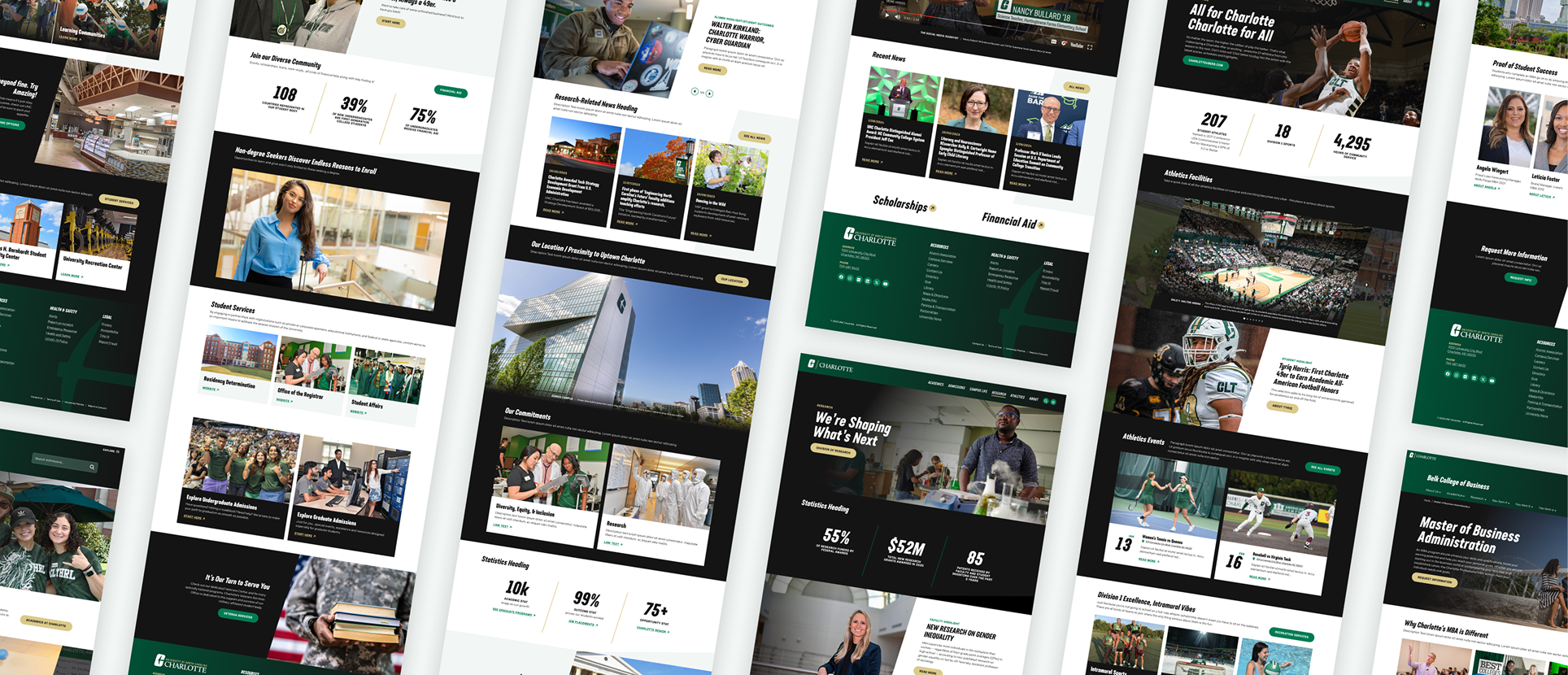
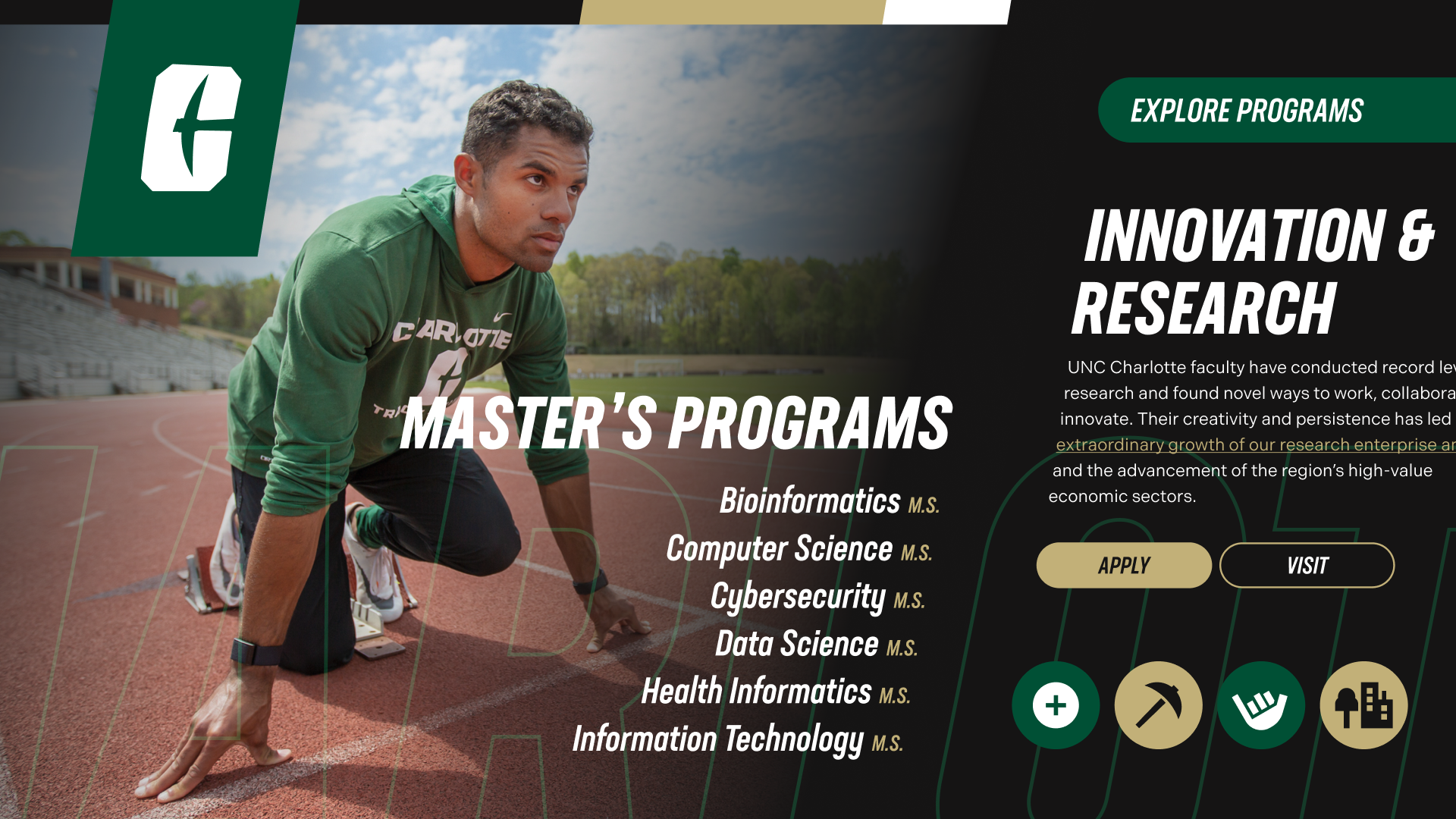
With Discovery complete, Savas Labs moved into Information Architecture and Visual Design, using these findings as the foundation for a redesigned experience built to reduce friction, build trust with prospective students, and reflect the ambition of a university that’s anything but ordinary.
We could not be happier with your team. Far and away the best partnerships I've experienced in my 11 years at the University.



.jpg)